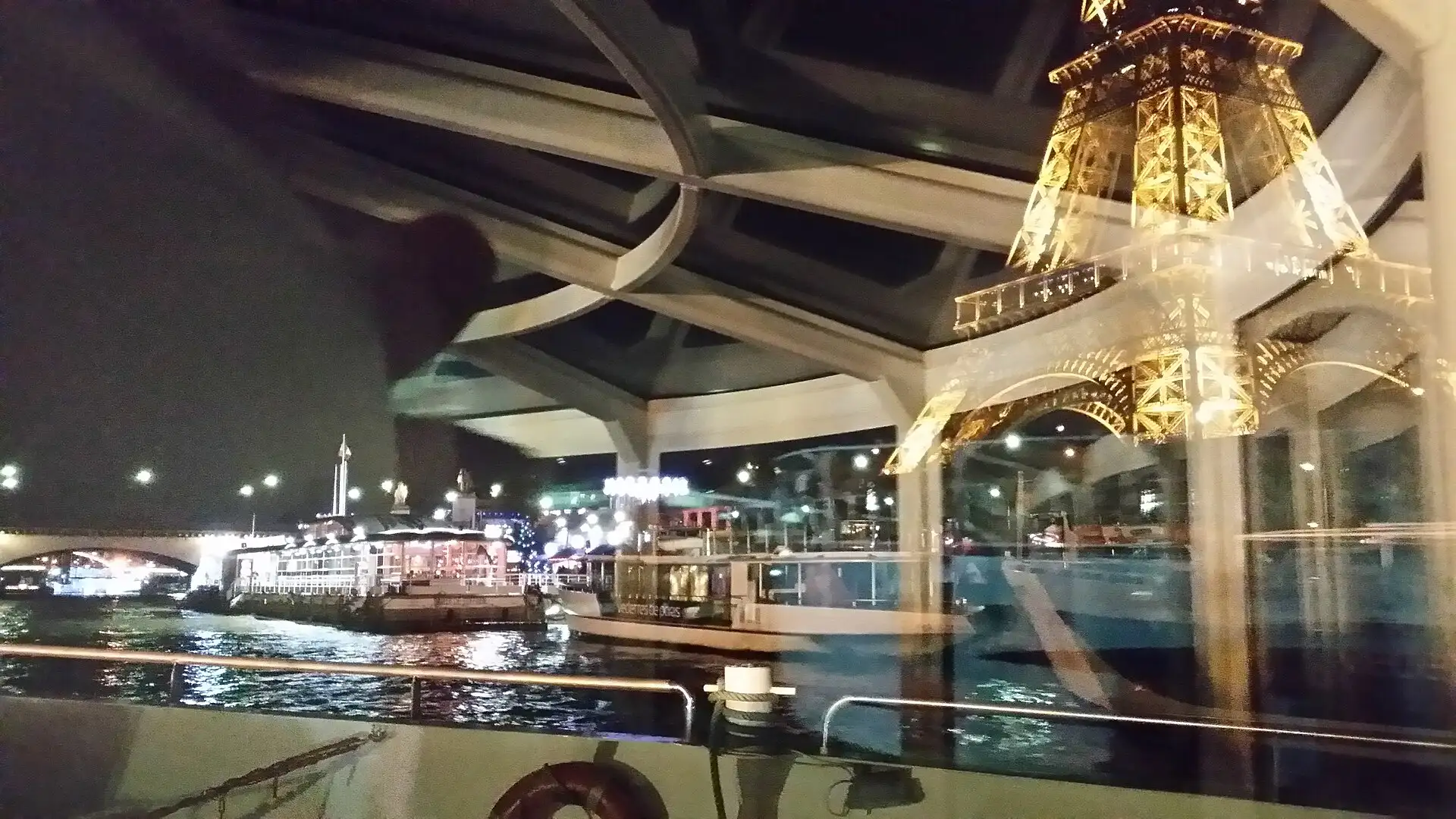
A Paris dinner cruise is two purchases disguised as one: a three-course French dinner, and two hours of front-row seating for the most photographed riverbank on earth. Priced against the city’s view-restaurants — where a comparable meal at a window costs €100 before wine — the €114–170 ticket is more rational than it first looks. The catch is that the boats differ far more than their brochures admit.
This page compares every major Seine dinner cruise by menu, boat, boarding pier and the details operators bury: seating categories, drink inclusions and cancellation windows. Ratings and prices come from GetYourGuide listings and official operator pages; where numbers can drift with the season, treat them as the floor, not a promise.
The contenders at a glance
| Boat | Price from | Courses | Music | Departs |
|---|---|---|---|---|
| Bateaux Parisiens | €115 | 3 | Live singer & band | Eiffel Tower (Port de la Bourdonnais) |
| Bateaux Mouches® | ~€114 | 4 | Live orchestra | Pont de l’Alma |
| Panoramic Views (Marina fleet) | €114 | 3 | Ambient / live | Near Musée d’Orsay |
| Maxim’s | €150+ | 3 | Live jazz | Eiffel Tower area |
| Le Calife | €120+ | 3 | Piano | Pont Neuf (books direct) |
| Ducasse sur Seine | €150+ | 3–4 | None (the food is the show) | Port Debilly |
Three of these — Bateaux Parisiens, Bateaux Mouches and the Panoramic/Marina service — are big-ship experiences with 200+ covers and reliable machinery. Maxim’s and Le Calife trade scale for atmosphere. Ducasse sur Seine, from the Alain Ducasse group, is the only one where the kitchen genuinely aims at gastronomy; it is also the one that books out furthest ahead. Full reviews live in the operators section.
What dinner is actually like on board
Boarding opens 30–45 minutes before departure. You are shown to an assigned table — this matters, because the assignment happened when you booked, not when you arrived. The boat sails the classic loop east past the Louvre and Notre-Dame, turns at Île Saint-Louis, and comes back west past the Eiffel Tower, usually timed so the hourly sparkle happens while dessert is on the table.
The cooking is banquet logistics done well: expect a composed starter (foie gras and salmon gravlax are perennials), a choice of three or four mains, proper cheese or dessert, and drinkable included wine at the entry tier. Portions are French-sized. If you sail the 18:00 seating you will be hungry again by midnight; that is normal and the late seating costs the same.
Local tip: the left side of the boat (port side, facing forward) gets the Eiffel Tower on the return leg on most Eiffel-departure routes. If the booking form offers no side choice, ask at boarding — crews will move you if the manifest allows.
Window seats: the game nobody explains
Every operator sells certainless “categories” — Privilège, Premier, Etoile, Service Premier — and the words mean one thing: distance from the glass. The base fare puts you in the centre rows, which are fine for the meal and mediocre for photos. The first upgrade tier (usually +€20–35) is the one worth paying for, because it guarantees the window rather than politely hoping for it. Beyond that you are paying for champagne you could order à la carte.
Two free tactics if you stay on the base fare: book the earliest possible date (tables are assigned in booking order on several fleets), and sail Tuesday–Thursday when half-empty salons get everyone closer to the glass.
Timing and seasons
- Summer (June–August): sunset lands mid-cruise around 21:45; the 20:30 sailings get golden hour and the lights. Book 2–3 weeks out for Saturdays.
- Winter (November–February): dark by 17:30, so even the early seating sails through full illuminations — the value play of the year. Salons are heated; coat check exists on the big ships.
- Holidays: Christmas Eve, New Year’s Eve and Valentine’s Day run special menus at 2–3× the standard price and sell out over a month ahead. The Christmas & New Year page tracks these formats.
Rain changes nothing except the open-deck aperitif. The view through floor-to-ceiling glass on a wet night — floodlights doubled in the river — is arguably better than the postcard version.
How to book without the usual mistakes
- Book the boat, not the search result. Aggregators list the same hull under several names. Match the pier and boat name to the operator pages we link on this site.
- Check what “drinks included” means. Entry tiers typically include a half-bottle of water and a glass or two of wine; “premium” tiers add champagne. À la carte wine on board is Paris-restaurant priced.
- Use free cancellation as a weather hedge. Most GetYourGuide listings cancel free until 24 hours before — book the date you want now, watch the forecast, rebook if a clearer evening appears.
- Arrive 30 minutes early, not 10. Boarding closes before departure time, and the Friday queue at Port de la Bourdonnais eats 20 minutes on its own.
For the cheaper sibling of this experience — same monuments, daylight, roughly half the price — see the lunch cruise guide. If the dinner is a proposal vehicle, read the romantic cruises page first: there are formats with far fewer witnesses.
What we like
- The Eiffel Tower illuminations and floodlit monuments do half the entertaining — no restaurant in Paris has this view
- One booking covers dinner and sightseeing, which frees an evening in your itinerary
- Big ships sail in any weather; glass roofs mean the view survives the rain
- Solid value against Paris fine dining: a comparable view-restaurant meal alone costs €100+
What to watch out for
- Kitchens serve 100–300 covers at once — expect good banquet cooking, not gastronomy
- Window tables usually cost extra or go to whoever booked earliest
- Boarding queues of 20–30 minutes on Fridays and Saturdays
- Vegetarian menus exist but are the weakest part of most cartes — check before booking
Frequently asked questions
How much is a dinner cruise on the Seine?
Standard 3-course dinner cruises start at €114–115 per person with drinks included at the entry level. Premium menus, window-side seating and 4-course services run €150–170. New Year's Eve and Christmas gala dinners cost 2–3 times the normal rate. Prices sourced from GetYourGuide and operator pages; they move with the season.
Which is better, Bateaux Parisiens or Bateaux Mouches dinner cruise?
Bateaux Parisiens rates higher for food and boarding organisation (4.7 vs 4.5 on GetYourGuide) and departs from the Eiffel Tower. Bateaux Mouches carries the historic name, serves four courses, and boards at Pont de l'Alma. For a first dinner cruise we'd book Bateaux Parisiens; for brand nostalgia, Bateaux Mouches.
What should I wear on a Paris dinner cruise?
Smart casual is the norm: no shorts, flip-flops or sportswear, but jackets and ties are not required. On Maxim's and premium services, cocktail attire fits the room better. Bring a layer — the gangway and open decks are cold after sunset even in summer.
Do dinner cruises have vegetarian or halal options?
All major operators offer a vegetarian menu if you request it at booking. Halal and kosher menus are generally not available on the big ships; some smaller charters can arrange them. Note dietary requests in the booking form, then confirm by email a few days before.
How far in advance should I book a Seine dinner cruise?
One to three weeks for a normal weekend, two months for Valentine's Day, Christmas week and New Year's Eve. Tuesday to Thursday sailings often have space a day or two out — and emptier decks.
Is the Seine dinner cruise worth it?
As a restaurant meal judged on the plate alone — no. As an evening that combines a good three-course dinner with the best possible seat for the illuminations — yes, and it is the single most-gifted Paris experience for a reason. Manage the expectation: you are paying for the window, and the window delivers.
What time do dinner cruises depart?
Most boats board 19:30–20:15 and sail around 20:30 for 2–2.5 hours. Several operators run an early seating around 18:00–18:30 that is cheaper and popular with families; in summer the late seating gets the sunset and the sparkle.