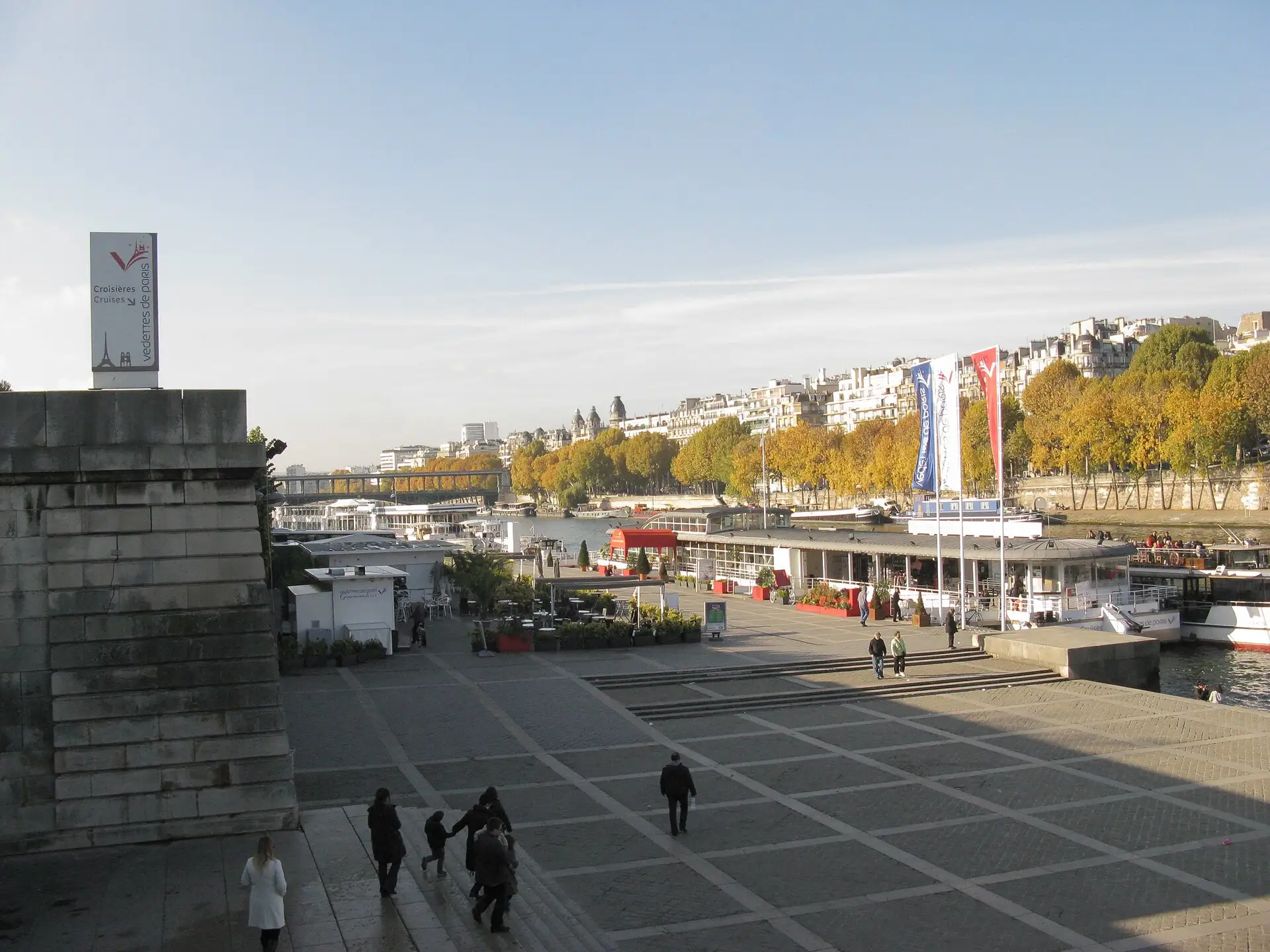
A Seine river cruise with kids works brilliantly or badly depending on one decision made before you ever reach the pier: the format. Get it right — short, open-deck, daylight — and the boat is the easiest hour of your Paris itinerary, the one where nobody queues, nobody walks, and the city parades past at stroller height. Get it wrong — a 2.5-hour seated dinner at 20:30 — and you will spend €100+ per head negotiating with a seven-year-old about sitting still.
This guide is the format decision, made properly: which cruises suit which ages, what the boats actually provide for families, and the one route that children consistently rank above the Eiffel Tower.
Why one hour beats every meal format
The standard one-hour sightseeing loop is the best Seine river cruise for families, and the reasons are unglamorous:
- It matches the attention span. An hour covers the full monument circuit — Eiffel Tower, the Louvre, Notre-Dame, a turn around the two islands — and ends before the novelty does.
- It costs €18 for adults, with reduced child fares below that. A family of four cruises for less than one adult dinner-cruise ticket.
- Nothing is wasted if it goes sideways. A meltdown 40 minutes into a one-hour loop costs you 20 minutes. The same meltdown on a dinner ship costs you an evening and three courses.
- Open decks absorb energy. Kids can stand at the rail, move between benches, and point at things loudly — all activities a white-tablecloth salon does not welcome.
Meal cruises are not banned; they are simply age-gated by physics. Teenagers manage a dinner cruise fine. For younger children who can handle a longer sitting, a Sunday lunch cruise is the far safer version — daylight, relaxed dress code, and an end time nowhere near bedtime.
The guided family cruise: riddles beat commentary
The weak point of the cheapest boats, for children, is the commentary: a recorded loop in several languages that adults half-hear and kids ignore entirely. The fix is a live guide — and one listing builds the whole sailing around families: the family-friendly guided cruise, where the guide runs riddles for the children along the route. Monuments become answers to questions instead of things adults point at; the difference in engagement is visible within minutes.
It suits roughly ages 4–12 — old enough to play, young enough to want to. Check the listing for the languages offered on your date and the current fare. If your children are past the riddle years, the standard one-hour loop with a good seat does the job; if they are under three, no commentary of any kind will matter, and the boat itself is the entertainment.
Logistics: strollers, toilets, snacks
Strollers. The big sightseeing fleets let you bring one aboard, but expect to fold and park it during the sailing and to carry it over the gangway yourself. Piers are ramped or stepped depending on the dock and river level. With a child under two, a carrier turns the whole operation from luggage-handling into a walk.
Toilets. The main sightseeing boats and every meal-cruise ship have them on board; the smallest open boats may not, so check your listing if you are travelling with a recently toilet-trained child. House rule that never fails: everyone goes at the pier before boarding, and the calm first ten minutes of the cruise are the backup window.
Child fares. Reduced children’s tickets are standard across the fleets and the youngest often sail free — but the age brackets and prices differ per operator, and the only reliable source is the booking page for your specific boat. Verify there rather than assuming; the differences between fleets are big enough to change which cruise is cheapest for your family.
Food. Sightseeing boats sell little or nothing aboard. Bring water and a snack — an hour is short, but the queue-board-sail-disembark cycle stretches longer than the cruise itself.
Timing: when to board
Morning sailings are the family sweet spot: the decks are emptiest, small children can stand at the rail instead of behind a wall of adults, and boarding is unhurried. Late afternoon buys prettier light at the cost of peak crowds. The after-dark illumination sailings — magical on paper — collide with bedtime, and the night cruise decks turn cold quickly; save that format for a trip with teenagers.
In summer, note that boats have limited shade on the upper deck: hats and water for a midday loop. In winter, the enclosed lower salons are heated, and a half-empty morning boat lets kids move freely between inside and out.
Local tip: board early and walk straight to the upper deck’s back rows — families cluster at the bow, so the stern rail usually has space, and it gets the unobstructed backward view of the Eiffel Tower on the return leg. If your child is monument-spotting, sit on the left side facing forward for the outbound run past the Louvre and Notre-Dame.
The canal route: the cruise kids remember
Here is the counterintuitive pick: the sailing children talk about at dinner is often not the Seine at all. The Canal Saint-Martin morning cruise trades postcard monuments for mechanics — the boat climbs through working locks, slips under swing bridges, and runs a roughly two-kilometre vaulted tunnel beneath Bastille, lit by air shafts from the street above. Underground boating, in the middle of Paris.
For a child, watching lock gates close and the water lift the boat beats any amount of Haussmann facade. The trade-offs: it is a longer sailing than the one-hour loop, so it suits kids who have already proven they can do an hour afloat, and morning departures are the ones to book. Take snacks, sit where the lock machinery is visible, and let the crew’s explanations do the entertaining.
The family playbook
- First cruise ever, kids under 6: the €18 one-hour loop, morning departure, upper deck.
- Ages 4–12, want engagement: the family-guided cruise with riddles — check languages for your date.
- Been-there kids, ages 6+: the canal tunnel route. It converts cruise sceptics.
- Family meal afloat: Sunday lunch cruise, never dinner, and request high chairs at booking.
- Any of the above: child fares and stroller rules live on each listing — check before you compare prices, and see the prices overview for the wider market.
The Seine is the rare Paris attraction that asks nothing of children: no walking, no whispering, no queue discipline once aboard. Pick the short boat, sit them by the rail, and let the city do the work.
What we like
- The one-hour format matches a child's attention span almost exactly — and costs a fraction of a meal cruise
- Open-air upper decks beat any museum queue for restless children
- The canal route adds locks and a ~2 km underground tunnel — genuine adventure, not just views
- Child fares are reduced on most operators, and the youngest often sail free
What to watch out for
- Dinner and lunch cruises mean 2+ hours at a table — a gamble with anyone under ten
- Strollers must usually be folded and parked during the sailing; gangways and stairs are on you
- Peak afternoon departures pack the decks; small children see legs, not monuments
- Recorded multilingual commentary on the cheapest boats will not hold a child's attention — a live guide will
Frequently asked questions
What is the best Seine river cruise for families?
For most families, a one-hour sightseeing loop: long enough to see the Eiffel Tower, Notre-Dame and the islands, short enough that nobody melts down, from €18 for adults. If your children are roughly 4–12, the family-guided cruise with riddles for kids is worth the step up — a live guide keeps them engaged the whole loop.
Do children pay full price on Seine cruises?
No — reduced child fares are standard and the youngest children often travel free, but the age brackets and rates differ per operator. The exact policy is printed on each booking page, so check the listing for your specific boat rather than assuming one fleet's rules apply to another. Book children's tickets in the same order as adults'.
Can I take a stroller on a Seine cruise?
On the big sightseeing fleets, yes: you can bring a stroller aboard, though crews generally ask for it to be folded and parked during the sailing, and you handle the gangway yourself. Smaller boats have less room — check the listing or ask the operator. A baby carrier is the low-friction option for children under two.
Are there toilets on board?
The main sightseeing boats and all meal-cruise ships have toilets on board; the smallest open boats may not, so check the listing if this is critical. Go before boarding regardless — pier facilities are more spacious than boat ones, and the first ten minutes of the cruise are the calmest window for a toilet run aboard.
What time of day is best for a family cruise?
Morning sailings are the quiet ones: emptier decks, easier seats at the rail, calmer boarding. Late afternoon works for the golden light but shares the boat with peak crowds. With small children avoid the post-dinner illumination sailings — the views are lovely but the timing collides with bedtime and the decks are cold.
Is the canal cruise good with kids?
Often the family favourite. The Canal Saint-Martin route swaps big monuments for rising locks, swing bridges and a roughly 2 km vaulted tunnel under Bastille — a stretch of genuine underground boating that children rate above the Eiffel Tower with surprising consistency. It is longer than the one-hour Seine loop, so pack snacks and pick a morning departure.